New AI app turns everyday objects into virtual pets

Tech Desk

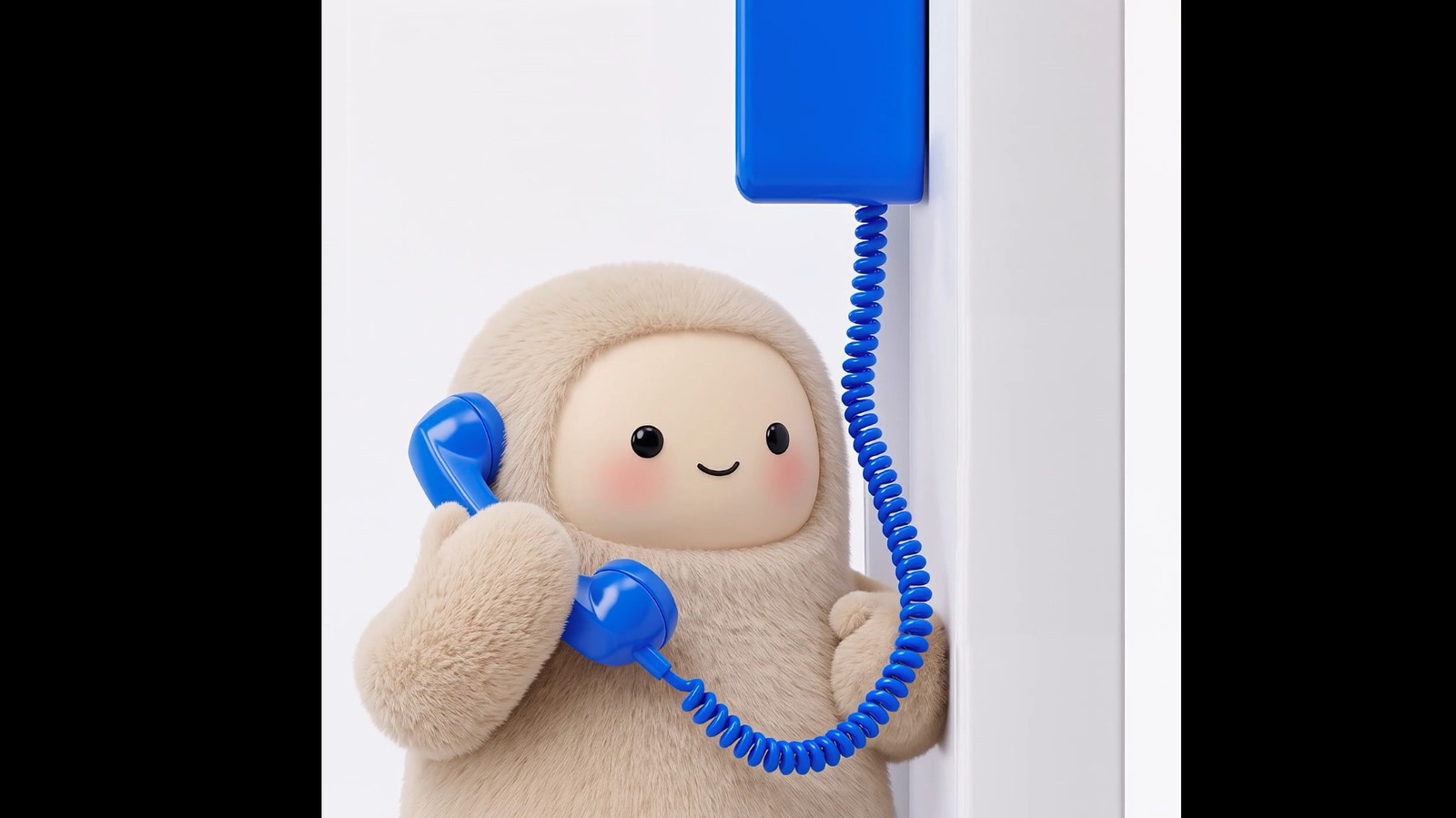
Object Agent Twins, or OATs, are micro-agent AI avatars displayed on small E Ink screens designed to be attached to common household items. This technology was developed by Daehwa Kim, who is a fifth-year PhD student at Carnegie Mellon's Future Interfaces Group. Kim showcased the project at the ACM Symposium on User Interface Software and Technology held in Detroit during early November, where academics and industry experts gather to discuss human-computer interfaces, and she received two Honorable Mention awards.
Advertisement
The concept draws inspiration from the Tamagotchi, the famous egg-shaped toys from the ’90s that featured digital pets requiring constant care. Kim aimed to replicate that experience for physical items. “We bring this joy of caring from virtual to physical objects,” she tells WIRED. While people have encouraged Kim to sell OAT kits, she has not yet decided if she will turn it into a business.
Kim notes that people spend their entire day looking at mobile devices, and AI agents often still require attention via smartphone screens. OATs were created as a method to bring those interactions into the physical world. While companies are rushing to build the next smartphone, such as the Humane Ai Pin, OpenAI's upcoming hardware with Jony Ive, or Meta's Muse Charm, many are using "cuteness" as a strategy for adoption.
OATs utilise an E Ink display linked to internal and external sensors that monitor moisture, temperature, humidity, light, occupancy, and motion. The hardware is relatively affordable at about $20 for the main module. The sprites are generated using Google Gemini's Nano Banana image-generation service, creating various emotions based on sensor data. Users can set this up through a web portal to name their OAT and choose sensors for their specific object.
The web app generates "Positive" and "Negative" behaviours based on the object's name and description. For a plant, positive triggers might include "consistent air temperature readings" and "low humidity levels" if the plant prefers dry conditions. Users can customise these behaviours for their specific plant type. For instance, attaching an OAT to a skateboard can track motion; if it remains still for a few days, the avatar looks sad and lonely, but it becomes happy once the user rides it. As Kim says, “These kinds of inanimate objects can be more expressive.”
Advertisement
A significant limitation is the short battery life, as the system is currently a proof of concept. OATs typically last three to four days, but they only last a day when paired with a sound-level sensor. The device includes a USB-C port to charge its lithium-ion polymer battery. Kim distributed OATs to various people and identified three primary use cases: tracking if an object is being used, such as a coffee machine; warning people near an object, like a 3D printer releasing fumes; or tracking personal habits, such as using a dumbbell to encourage exercise.
The symposium demo was popular, leading Kim to host a competition for the most creative pairing ideas. Her website now hosts a gallery of user-created sprites, including an animated conference badge and a panda avatar for an Owala water bottle. However, the project sparked a debate regarding the anthropomorphising of AI and whether it is appropriate to assign human traits and emotions to these sprites to foster human connection.
This remains a topical issue in the AI industry, where companies often describe chatbot behaviours using human terms, such as "hallucinate" or Anthropic's "dreaming" feature. These terms may distort moral judgments about technology and lead to excessive trust. Kim argues that OATs maintain very limited interactions to avoid this, restricted to simple expressive emotions on the E Ink screen. “Anthropomorphism can be very useful in certain ways, like helping people to change their behaviours,” Kim says. “People name their car, and”