Microsoft's new Surface Laptop Ultra is powerful but trails Apple

Tech Desk
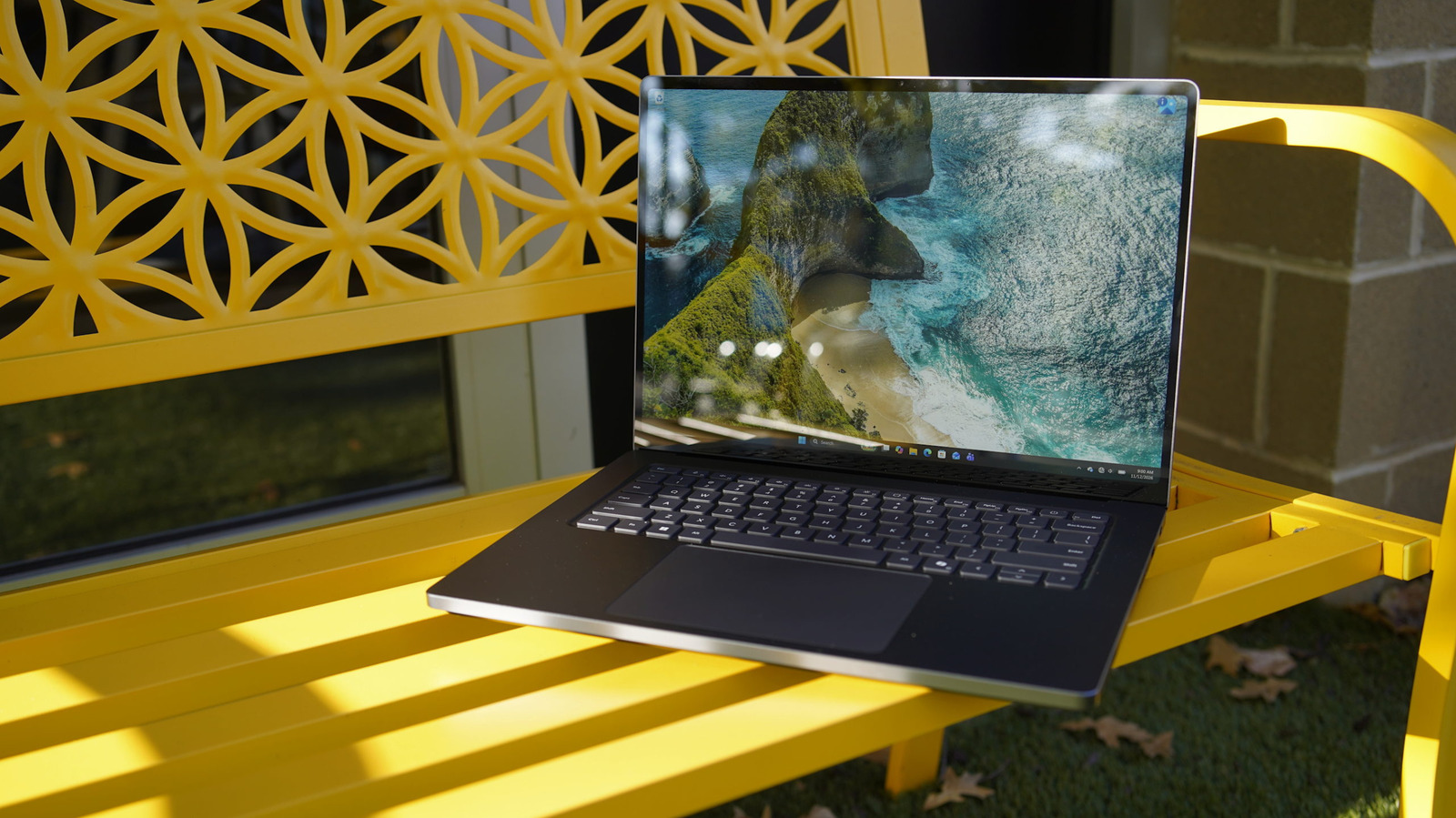
The new Surface Laptop Ultra from Microsoft avoids the complex features of the firm's convertible models, appearing instead as a sleek, all-metal business laptop. Upon opening the device, users will find a 15-inch screen featuring a tall 3:2 aspect ratio rather than the standard widescreen layout. The base of the chassis includes a slightly segmented design, similar to the Surface Laptop Studio, which provides space for cooling vents and downward-firing speakers.
Advertisement
The primary selling point of the Surface Laptop Ultra is the NVIDIA RTX Spark chip, an Arm-based system-on-a-chip. This hardware can be configured with up to 20 CPU cores and 6,144 GPU cores. The most powerful version costs $3,700 and includes 32GB of RAM, while the base model starts at $2,600 with 18 CPU cores and 5,120 GPU cores.
Similar to Apple Silicon and Qualcomm's Snapdragon X chips, the RTX Spark uses unified memory accessible to both CPU and GPU. This provides higher memory bandwidth than typical Intel or AMD-based Windows PCs where components are spread across the motherboard. By having direct access to large amounts of RAM, the RTX Spark can house large AI models locally, a feature Microsoft and NVIDIA are presenting as a major evolution for PCs.
The NVIDIA GPU cores allow the RTX Spark to provide gaming performance comparable to an RTX 5070 laptop GPU. This makes it suitable for 1440p gaming, with NVIDIA's DLSS upscaling and frame generation potentially enabling performance at 4K and higher resolutions. However, the Surface Laptop Ultra starts at a significantly higher price than most RTX 5070 gaming notebooks, making it less ideal for pure gaming enthusiasts.
The Arm CPU presents both advantages and challenges, as it is more efficient than Intel and AMD's x86-64 chips but requires emulation for older Windows software and drivers. While this previously caused bugs for niche apps, Microsoft's emulation for x86-64 software has seen dramatic improvements. Although kernel-level anti-cheat software initially faced issues on early Snapdragon X systems, Microsoft and NVIDIA have resolved these problems, and users can now easily play Fortnite on Arm-based Windows systems.
Advertisement
Microsoft initially marketed the 15-inch screen as the brightest on the market, boasting 2,000 nits of HDR brightness. However, the Apple MacBook Pro with PROLED Display has matched this brightness while offering deeper blacks and higher contrast via its OLED screen. The Surface Laptop Ultra's mini-LED display remains impressive for viewing HDR films and playing games that utilise its brightness capabilities.
The keyboard on the Surface Laptop Ultra mirrors the standard Surface Laptop, offering deep key depth and satisfying feedback. The large trackpad includes haptic feedback, allowing users to feel a nudge when locking apps to the screen edges, similar to the Logitech MX Master 4 mouse. This feature serves as a useful addition to the Windows interface.
A unique feature of the device is its magnetic USB-C charging cable, which snaps into a USB-C port and slides out if pulled, similar to Apple's MagSafe. This replaces the proprietary Surface connection, allowing the port to function as a standard USB-C port for other cables. Microsoft developed this invention and stated it could be made available to partner laptops in the future.
The port selection on the Surface Laptop Ultra is similar to the MacBook Pro, featuring three USB-C ports, HDMI, an SD card slot and a headphone jack. Additionally, the device includes a USB Type-A connection, which may prove useful for Windows creatives using older hardware.